Introduction
Undergoing hernia repair is a significant decision. The primary goal of the procedure is simple: relieve your symptoms, close the defect in the abdominal wall, and help you return to a comfortable, active lifestyle. For many patients, the operation brings immediate relief. However, a common question often lingers during recovery: can a hernia come back after surgery?
The short answer is yes. Although modern surgical techniques have significantly improved success rates, there is still a possibility of a hernia recurring. When a hernia recurs, it is known medically as a recurrent hernia. It means the same hernia has pushed back through the repaired muscle layer or a new weakness has developed right next to the previous surgical repair.
If you are asking yourself, "does hernia come back after surgery?" or trying to understand your personal risks, you are not alone. In this complete guide, we will break down the physiological reasons behind hernia recurrence, evaluate the statistical chances, identify key risk factors, and outline actionable steps on how to prevent hernia from coming back.
Understanding Hernia
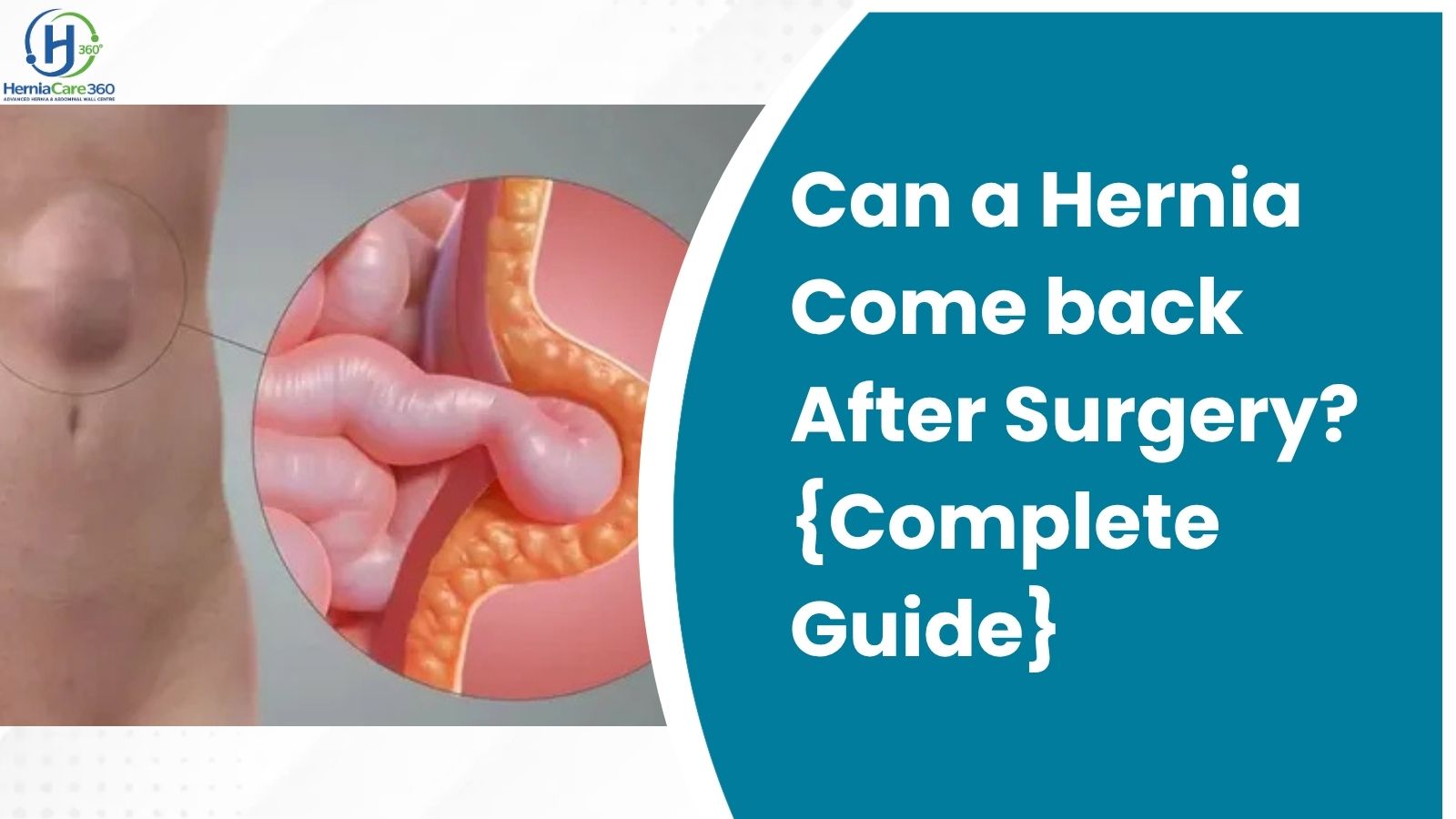
To understand why a hernia might return, it is helpful to understand what a hernia is in the first place. A hernia occurs when an internal organ, fat tissue, or a loop of the intestine pushes through a tear or weak spot in the surrounding muscle wall or connective tissue (fascia).
The human abdominal wall is a complex structure of muscle layers and fascia that acts as a natural corset, holding your abdominal organs firmly in place. However, certain areas are naturally prone to weakness (such as the groin or belly button). When pressure inside the abdomen increases, internal tissues can push through these weak zones. This results in a visible bulge under the skin, which may be accompanied by a dull ache, burning sensation, or discomfort during lifting or coughing.
A hernia is a structural, mechanical issue. Because muscles cannot naturally bridge a physical gap on their own, a hernia will not heal without surgical intervention. Surgery is the only definitive treatment to repair the structural defect.
Types Of Hernia
The likelihood of a hernia recurring is closely tied to the specific type of hernia you have. The most common types include:
-
Inguinal Hernia (Groin) Occurs in the groin area when a loop of intestine or fat pushes into the inguinal canal. This is the most common type of hernia, particularly in men, accounting for roughly 75% of all abdominal wall hernias.
-
Umbilical Hernia (Navel) Occurs right at or very close to the belly button. It is common in infants (often resolving on its own) but can also develop in adults due to pressure from obesity, multiple pregnancies, or fluid accumulation in the abdomen.
-
Incisional Hernia (Scar-related) Develops at the site of a previous surgical scar. If the surgical wound from a past abdominal operation does not heal perfectly, the muscle wall can separate, allowing a hernia to bulge through. These hernias carry the highest rate of recurrence.
-
Ventral Hernia A general term for any hernia occurring along the midline of the abdomen (excluding umbilical hernias). This includes epigastric hernias (above the navel) and spigelian hernias.
-
Femoral Hernia A less common type of groin hernia that develops slightly lower than an inguinal hernia, in the femoral canal. It is more common in women and carries a high risk of strangulation (obstruction of blood supply).
Why do hernias come back?
Understanding the physiological and clinical factors of recurrence is key to prevention. If you ask yourself, "after hernia surgery can it come back?" the answer depends on several intersecting variables:
A. Tissue Tension and Weakness
In the past, surgeons performed "tension repairs" where the torn muscle layers were pulled together and stitched shut. Because the surrounding muscle was already thin or weak, pulling it under tension often caused the sutures to rip through the tissue over time. This tissue failure is the classic cause of recurrence. Today, the use of synthetic mesh provides a tension-free repair, which has dramatically lowered failure rates.
B. Improper Mesh Selection or Placement
If the surgical mesh selected is too small, it may not overlap the borders of the muscle tear sufficiently. Over time, tissue pressure can cause the mesh to wrinkle, shrink, or shift, allowing the hernia to bulge out around the edge of the mesh. Precise placement (such as retro-rectus or preperitoneal placement) is critical to prevent shifting.
C. Surgical Site Infection
An infection in the surgical wound after the initial operation can compromise the body's natural healing process. If infection sets in, it can weaken the scar tissue or prevent the surrounding muscles from incorporating the mesh, leading to a breakdown of the repair.
D. Chronic Abdominal Straining
Any condition that chronically increases pressure inside your abdomen can place continuous force on the surgical repair. Persistent coughing (common in smokers or COPD patients), severe constipation (straining during bowel movements), urinary obstruction (due to an enlarged prostate), or premature return to heavy weightlifting can stress the surgical site before tissue integration is complete.
Chances of hernia recurrence
The statistical chances of hernia recurrence have decreased significantly over the last two decades. Let's look at how the surgical method impacts the numbers:
| Hernia Type & Repair Method | Estimated Recurrence Rate |
|---|---|
| Groin (Inguinal) Repair with Mesh | Under 1% – 3% |
| Groin (Inguinal) Repair Without Mesh (Suture-only) | Up to 15% – 30% |
| Umbilical Hernia (Small, Mesh Repair) | 1% – 3% |
| Incisional Hernia (Simple closure) | Up to 20% – 45% |
| Incisional Hernia (Advanced AWR/Mesh Placement) | Under 5% – 10% |
As the data highlights, using mesh remains the gold standard because it drastically lowers the chances of the hernia coming back. Furthermore, choosing a laparoscopic or robotic-assisted procedure under a skilled specialist minimizes tissue trauma, helping you heal more securely.
Risk of a hernia coming back
Certain lifestyle and medical factors increase the risk of a hernia coming back. If you fall into any of these categories, you should take extra precautions during your recovery period:
- Obesity: Excess abdominal weight places constant, heavy pressure on the abdominal muscles, pulling at the sutures and the mesh interface.
- Smoking: Nicotine restricts blood flow, delaying wound healing. Additionally, smoking damages collagen production, leading to weaker scar tissue, and triggers chronic coughing which forces sudden pressure onto the repair.
- Diabetes: Uncontrolled blood sugar levels interfere with collagen synthesis and increase the risk of surgical site infections, weakening the final repair.
- Poor Nutrition: Your body needs protein and vitamins (especially Vitamin C) to rebuild strong connective tissue. Poor nutrition leads to fragile collagen support.
- Immunosuppressive Medications: Steroids or chemotherapy drugs slow down the natural inflammatory healing response, delaying mesh integration.
How can you prevent a hernia from coming back?
If you want to know how to prevent hernia from coming back, you must focus on both immediate post-operative instructions and long-term lifestyle habits. Taking a proactive approach to your recovery will significantly lower your risks.
Key Steps: How to Prevent Hernia from Coming Back
- Limit Lifting Weights: Strictly follow your surgeon's lifting restrictions (usually under 5 kg for the first 4 to 6 weeks).
- Manage Chronic Coughing: If you suffer from allergies, asthma, or COPD, speak with a doctor to get a cough suppressant prescription before surgery.
- Avoid Constipation: Eat a high-fiber diet, stay well-hydrated, and use stool softeners if needed to avoid straining during bowel movements.
- Quit Smoking: Avoid tobacco products for at least 4 weeks before and 6 weeks after your surgery to support cellular wound healing.
- Maintain a Stable Weight: Work toward a healthy BMI to minimize permanent abdominal wall tension.
- Use Proper Lifting Techniques: When lifting light objects, always bend your knees and use your legs instead of rounding your back and straining your abdominal core.
How is a recurrent hernia treated?
If your hernia does recur, it is important not to panic. While a recurrent hernia is more complex than a primary hernia, it can still be successfully repaired. The treatment for a recurrent hernia almost always demands another surgical procedure.
Treating a recurrent hernia demands high surgical expertise. Because there is pre-existing scar tissue and potentially a previously placed mesh, the surgeon must map out a new surgical approach. If your first surgery was an open procedure, the surgeon will typically choose a laparoscopic or robotic approach to avoid the old scar tissue.
For complex recurrent ventral or incisional cases, advanced techniques like Abdominal Wall Reconstruction (AWR) are used. Using procedures like TAR (Transversus Abdominis Release), the surgeon separates the muscle layers of the abdomen, slides them back into their natural position, and places a large reinforcing mesh in a deep, protected layer.
To guarantee a successful, permanent repair, you should consult an expert Hernia Surgeon in Chennai. Senior specialists like Dr. Kumar of Billroth Hospitals bring nearly three decades of clinical experience and advanced robotic/laparoscopic expertise to resolve complex recurrent hernia repairs safely.
Conclusion
In summary, while a hernia can return after surgery, the chances are very low under modern clinical protocols. Modern mesh repairs, advanced laparoscopic and robotic platforms, and careful patient preparation have made hernia surgery one of the safest and most successful procedures performed today.
By focusing on proper wound care, avoiding straining, maintaining a healthy weight, and consulting a dedicated surgical specialist, you can protect your repair and ensure a complete, healthy recovery.
Frequently Asked Questions
Can a hernia come back years after surgery?
Yes. While most hernia recurrences happen within the first two years (often due to wound healing issues or early strain), a hernia can return many years later. This is usually caused by gradual weakening of the abdominal muscles as part of the natural aging process or chronic conditions like persistent coughing or heavy straining.
What does a recurrent hernia feel like?
A recurrent hernia typically feels identical to the original hernia. You will likely notice a soft bulge near your previous surgical scar or groin crease. It may cause a dull ache, heavy sensation, or mild discomfort that becomes more noticeable when standing for long periods or lifting items.
Is a second hernia surgery more dangerous than the first?
While a second repair is surgically more complex due to scar tissue, it is very safe when performed by an experienced hernia specialist. Using minimally invasive approaches (laparoscopic or robotic) allows the surgeon to access the hernia from a different tissue plane, avoiding the scar tissue from your first operation.
Does coughing damage a hernia repair?
Severe, chronic coughing during the first few weeks after surgery can put strain on the fresh repair. If you need to cough or sneeze, it is recommended to support your abdomen by pressing a pillow gently against your incisions to splint the area and absorb the pressure.
How can I tell if my hernia has recurred or if it is just scar tissue?
Scar tissue or postoperative fluid (seromas) can cause a firm sensation or mild bulge that typically resolves or softens over 6-12 weeks. A true recurrence will usually present as a soft, reducible bulge that grows when coughing or straining and may disappear when lying down. A surgeon can confirm this using a physical examination or an ultrasound.
Will a recurrent hernia go away without surgery?
No, a recurrent hernia cannot heal on its own. Like primary hernias, they represent a physical defect in the muscle layer that requires surgical repair. Left untreated, a recurrent hernia can grow larger and carries a risk of complications like incarceration or strangulation.
How soon can I exercise after hernia surgery to prevent recurrence?
You should restrict physical activity to light walking for the first 4 to 6 weeks. Core exercises, heavy lifting, and high-impact sports must be avoided during this initial phase as the muscle tissues require time to scar around and integrate with the mesh. Always consult your surgeon before restarting any rigorous exercise regimen.