Get advanced laparoscopic hernia surgery in Chennai from Dr. Kumar, the leading minimally invasive hernia specialist in Chennai. Experience faster recovery, minimal pain, and tiny scars under the care of the best hernia doctor in Chennai.
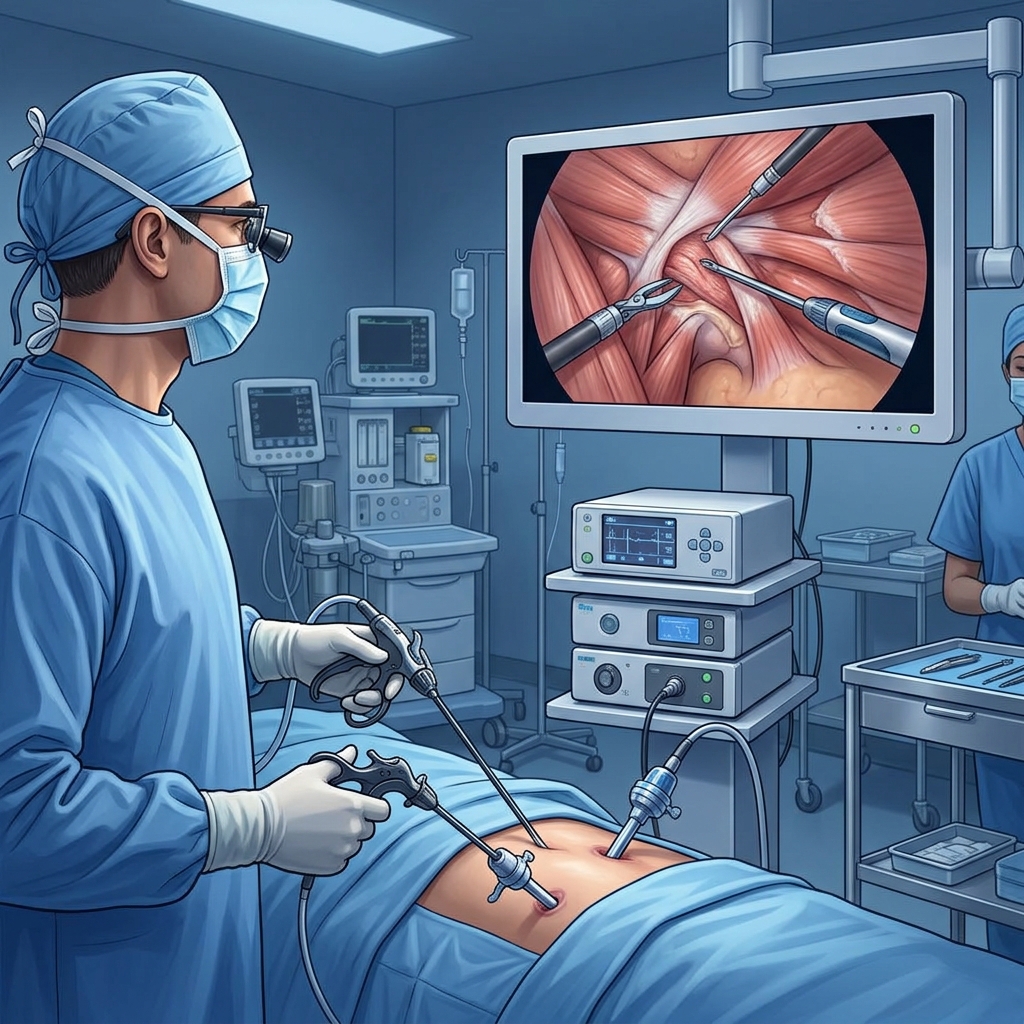
Laparoscopic hernia repair is a minimally invasive surgical technique where the surgeon makes several small incisions (usually 0.5–1 cm) instead of one large incision. A laparoscope (a thin tube with a camera) is inserted through one of the incisions, providing a magnified view of the surgical area on a monitor.
Specialised instruments are inserted through the other incisions to repair the hernia. A synthetic mesh is typically placed over the hernia defect and secured with sutures, staples, or tackers to reinforce the abdominal wall.
Keyhole Precision
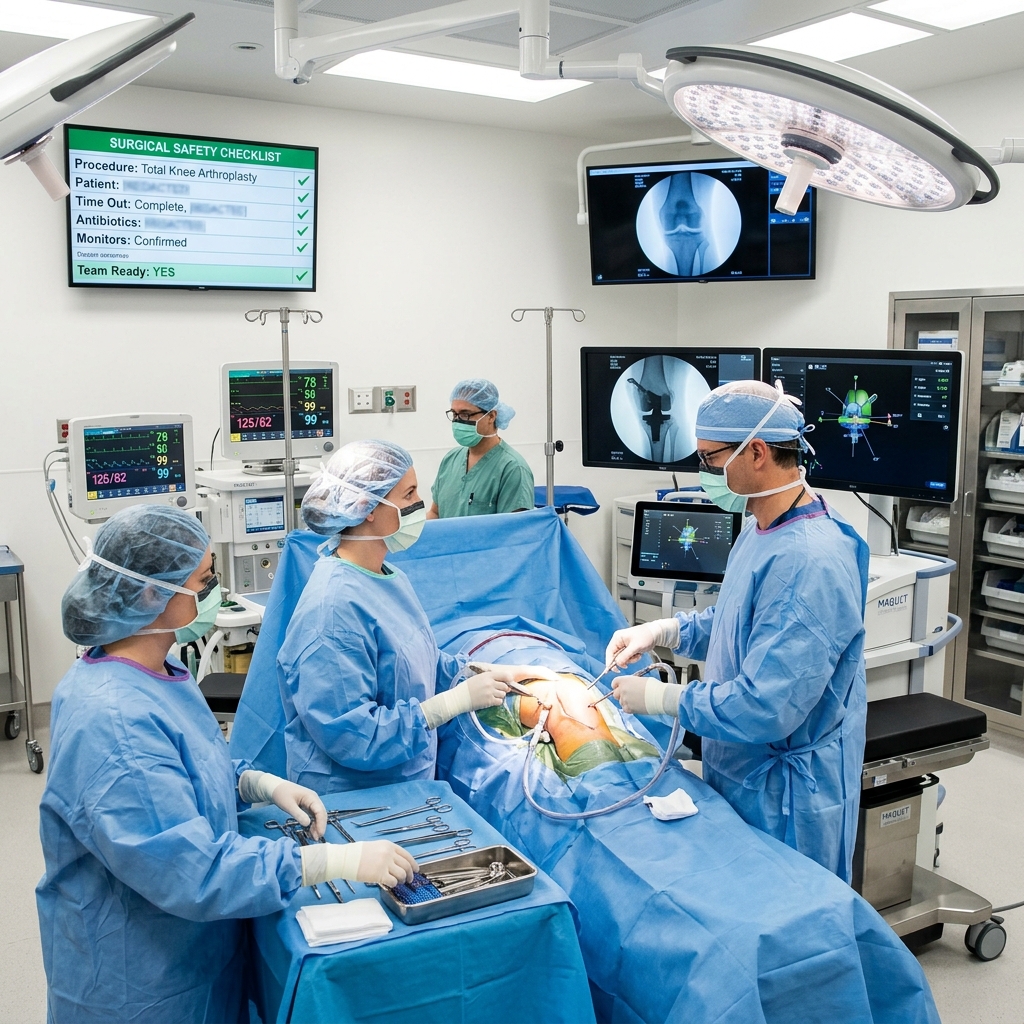
High-Tech Anesthesia & Micro-Tools
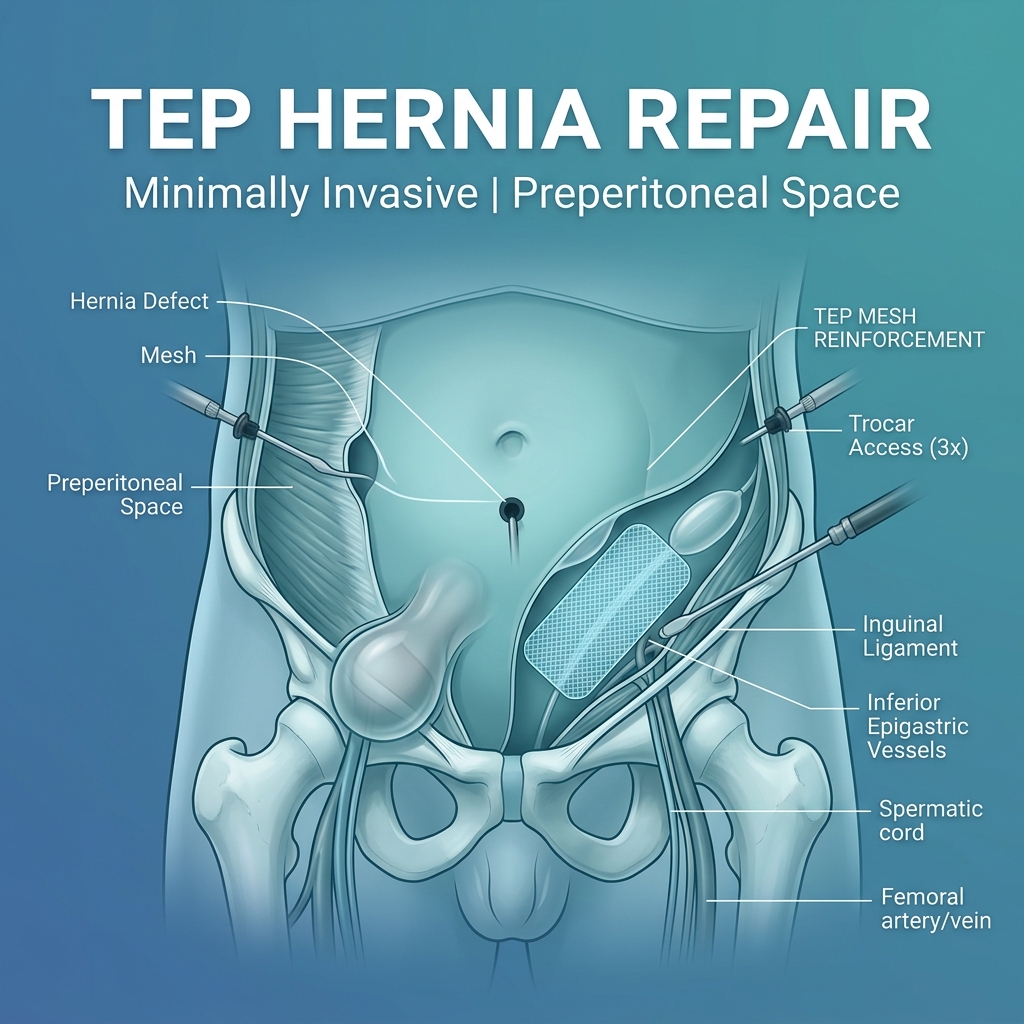
There are several tailored minimally invasive options. Dr. Kumar applies specific entry methods based on your physical assessment and diagnostic scans.
Groin Focus
The mesh is placed entirely outside the peritoneal cavity in the preperitoneal space, ensuring abdominal organs are not touched.
High Visibility
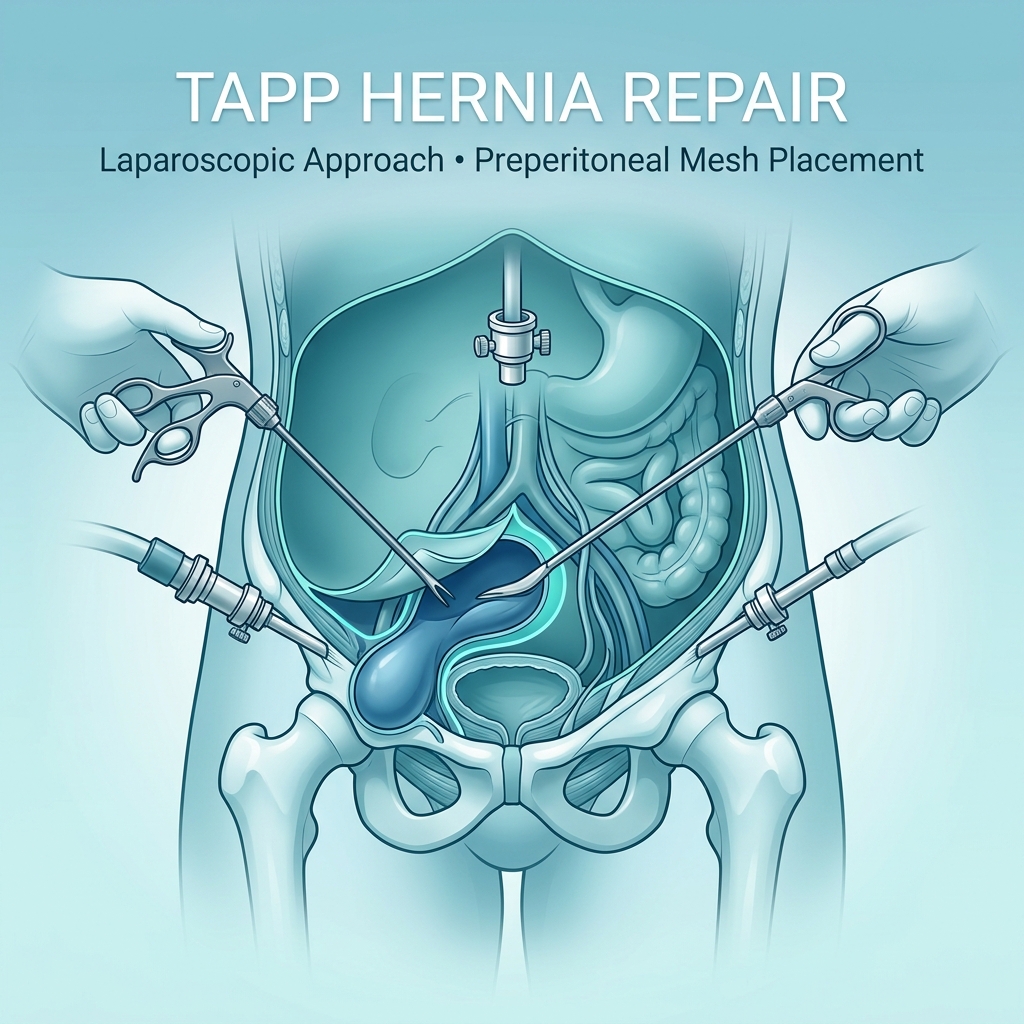
The peritoneum is briefly entered to place mesh behind it, allowing comprehensive pelvic visualization to address other findings.
Complex Repair
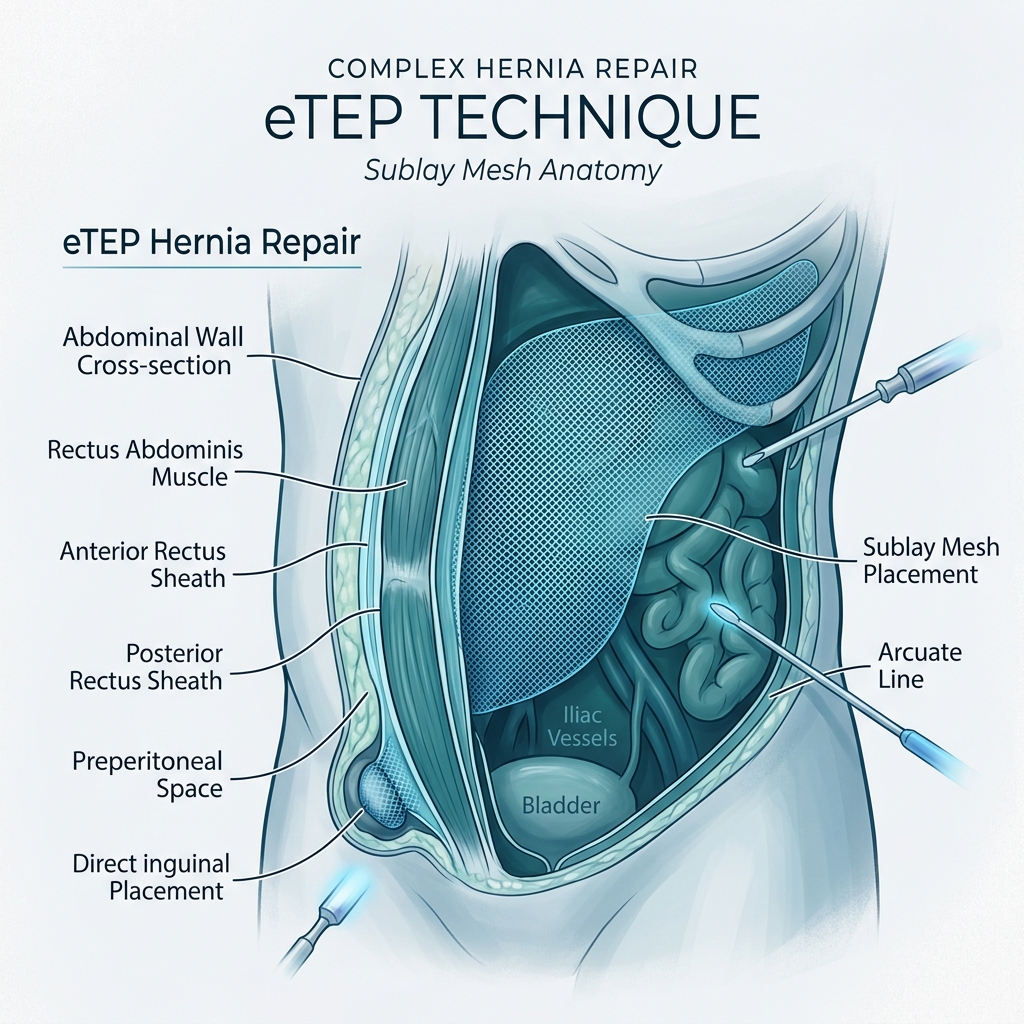
eTEP stands for extended view Totally Extraperitoneal repair for modern Laparoscopic and Robotic platforms. Dr.Kumar is an expert in the eTEP technique and often uses this technique for huge Ventral Hernias and Complex Hernias.
Laparoscopic hernia repair offers significant clinical advantages compared to traditional open surgery, making it the preferred choice for most patients.
Gold Standard Accuracy
Approved by Global Surgical Bodies
Only 3 small keyhole incisions (0.5–1 cm) compared to a 3–6 inch incision in open surgery, yielding minimal scarring.
Most patients return to normal activities within 1–2 weeks, compared to 3–6 weeks with traditional open surgery.
Minimally invasive keyhole surgical entry means less tissue damage, resulting in significantly lower post-operative discomfort.
Most laparoscopic hernia repairs are performed as day-care surgery, allowing same-day or next-day discharge.
Smaller incision entry fields limit environmental exposure of deep internal tissues, reducing risks of surgical site infections.
Both left and right side groin hernias can be easily repaired through the same three keyhole incisions in one setting.
Understanding the procedure can help ease any anxiety about surgery. Here's what happens during laparoscopic hernia repair.
General anaesthesia is administered, so you'll be asleep and pain-free throughout the procedure.
Three small incisions (5–10 mm each) are made in the abdomen. Carbon dioxide gas inflates the abdomen for better visibility.
The laparoscope guides the surgeon to gently push the hernia back and place a sterile mesh over the defect.
The mesh is secured, gas is released, and small incisions are closed with sutures or surgical glue.
The procedure typically takes 30–90 minutes depending on the type and complexity of hernia. Most patients spend 2–4 hours in the hospital including recovery time.
Recovery from laparoscopic hernia repair is typically faster and more comfortable than open surgery. Here's what to expect.
Dr. Kumar will recommend the most suitable approach based on your specific condition. Here's how laparoscopic repair compares to other techniques.
| Technique | Best For | Recovery | Scarring |
|---|---|---|---|
| Laparoscopic (Standard) | Most primary hernias, bilateral repairs | 1–2 weeks | 3 small keyholes |
| TEP | Groin hernias, avoiding peritoneal entry | 1–2 weeks | 3 small keyholes |
| TAPP | Hernias requiring full pelvic inspection | 1–2 weeks | 3 small keyholes |
| eTEP | Complex, large, or recurrent hernias | 2–4 weeks | Small keyholes |
| Open Repair | Very large hernias, not candidates for laparoscopy | 3–6 weeks | Single larger incision |
Dr. Kumar will evaluate your condition and recommend the most suitable surgical approach for optimal outcomes.
Most laparoscopic hernia repairs take between 30 and 90 minutes depending on the type and complexity. Bilateral (both sides) repairs naturally take longer. Total time in hospital, including preparation and recovery from anaesthesia, is usually 3–5 hours.
+91 89255 02759
Tap to call