Minimally Invasive Technique

TEP Hernia
Repair in Chennai

Totally Extraperitoneal (TEP) repair is an advanced laparoscopic hernia surgery in Chennai. Consult Dr. Kumar, a premier hernia specialist in Chennai, for safe, organ-sparing TEP repair.

Understanding TEP

What is TEP Hernia Repair?

TEP stands for Totally Extraperitoneal hernia repair. It is a highly specialized laparoscopic technique where the surgeon accesses and repairs the hernia entirely within the space between the abdominal muscles and the peritoneum (the membrane lining the abdominal cavity), without ever breaching the peritoneal cavity itself.

This advanced entry method isolates the surgical space entirely from internal abdominal organs, providing high durability while eliminating the risks of bowel irritation, adhesions, or organ puncture related to entry into the abdomen.

TEP at a Glance

30-60

Minutes Surgery Time

1-2

Weeks Recovery Period

3

Mini Keyhole Incisions

99%+

Long-term Success Rate
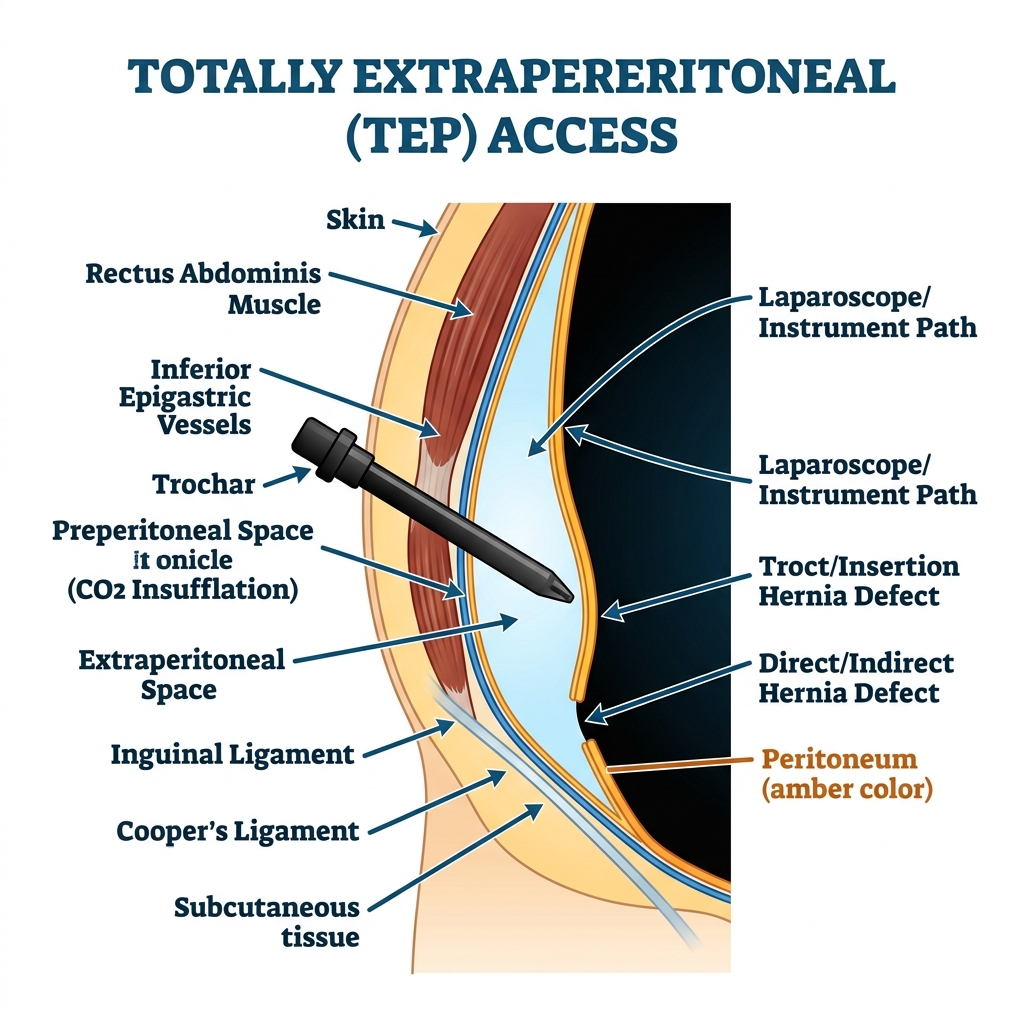
TEP Hernia Repair - Advanced Extraperitoneal Access

Preperitoneal Protection

Operates entirely outside the abdominal space
The Procedure

How TEP Repair Works

Understanding the surgical steps can help ease any anxiety. Here is a step-by-step overview of the TEP technique.

1

Anesthesia & Incision

General anesthesia is administered. The patient lies flat with a slight head-down tilt. The surgeon makes a tiny incision below the belly button.

2

Creating the Workspace

A specialized balloon dissector is gently inserted and inflated to gently separate tissues and create a working space in the preperitoneal region, completely avoiding the abdominal cavity.

3

Hernia Identification

A laparoscope with a high-definition camera is introduced, allowing the surgeon to visualize the groin musculature and gently reduce (pull back) the hernia sac.

4

Mesh Placement

A synthetic anatomical mesh is inserted and secured to completely cover and reinforce the weakened region, usually fixed with tissue glue or self-fixating grips to reduce post-op ache.

5

Closure

The carbon dioxide gas is released, instruments are removed, and the three tiny keyhole cuts are closed using absorbable sutures or medical skin glue for optimal healing.

Advantages

Benefits of
TEP Repair

TEP repair offers outstanding visual clarity and surgical durability entirely outside the peritoneum. Here is why it remains a top choice for groin and bilateral hernias.

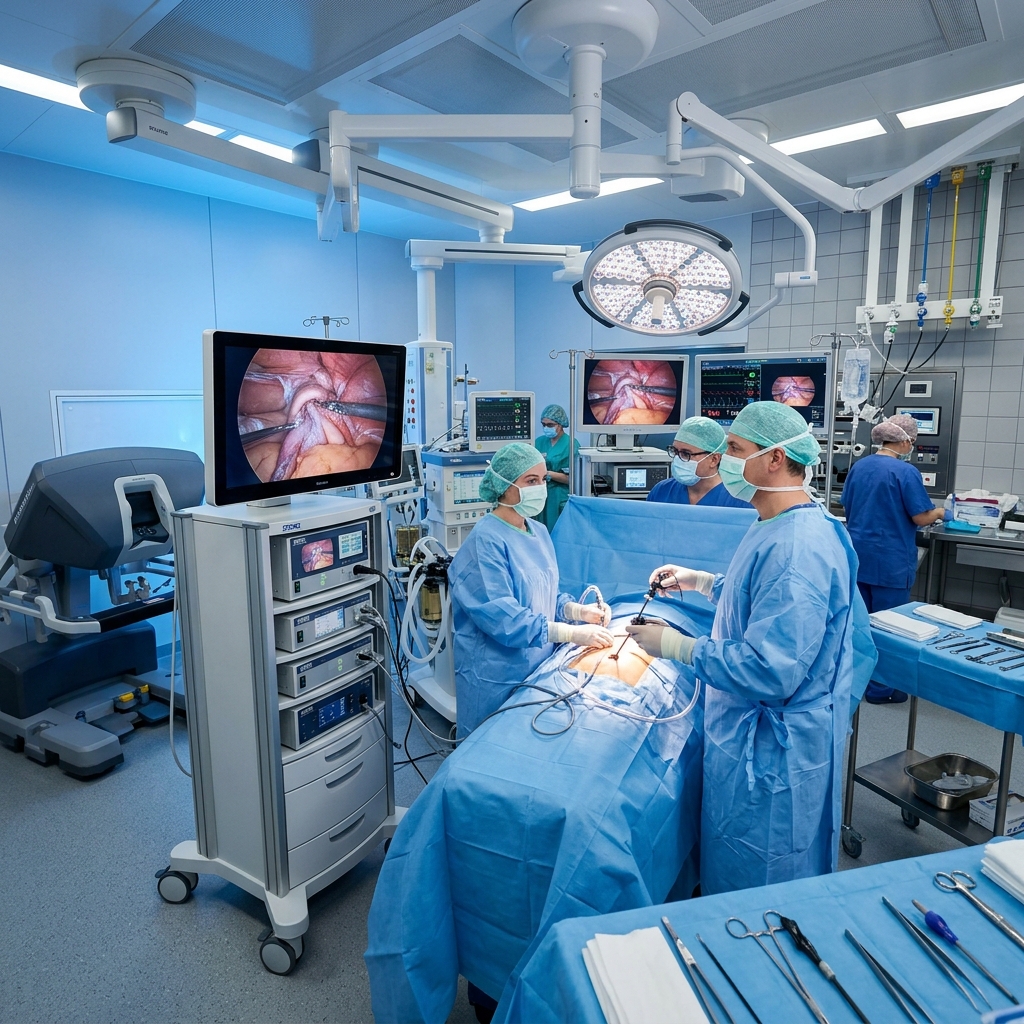
TEP Hernia Surgery Room

Extraperitoneal Safety

Operates entirely outside the abdominal space

No Peritoneal Entry

By staying outside the peritoneal cavity, TEP completely avoids the risk of bowel injury, chronic intra-abdominal adhesions, and surgical scar tissue.

Reduced Chronic Pain

Working within the extraperitoneal space causes less disruption to delicate groin nerves, dramatically lowering the risk of chronic post-op neuralgias.

Daycare Surgery

Most patients go home the exact same day. TEP's gentle approach allows quick recovery without long hospital stays.

Excellent Visualization

The extraperitoneal plane provides clear, close-up access to the groin structures, facilitating precise mesh deployment and perfect coverage.

Bilateral Groin Repair

Both left and right groin hernias can be repaired in the same session through the same three keyhole incisions, eliminating a second procedure.

Barely Visible Scarring

Three micro incisions (0.5 to 1 cm) heal rapidly with superior cosmetic results, fading to practically invisible marks over a few months.

Am I a Candidate?

Who is a Candidate for TEP?

TEP is an outstanding option for the majority of patients suffering from groin (inguinal or femoral) hernias. Dr. Kumar reviews patient health indicators and hernia size during clinical consult to map your compatibility.

Ideal Candidates

Primary (first-time) groin hernias, bilateral hernias, and active individuals seeking quick return to sports or manual labor.

Considered Candidates

Patients with minor prior pelvic procedures. Extraperitoneal access can still be safely navigated depending on surgical history.

May Require Alternative (TAPP/Open)

Very large irreducible or strangulated groin hernias, or history of major lower abdominal/prostate surgery where scarring blocks the preperitoneal space.

Surgical Selection Criteria

Hernia size, location (inguinal vs. femoral), and bilateral presence
Primary hernia vs. history of previous recurrence
Presence of surgical scars in lower abdominal or pelvic space
Anesthetic suitability and overall cardiopulmonary status
Patient job demands (heavy listing requirements, physical stress)
💡

The right approach matches your anatomy. Dr. Kumar utilizes specialized physical screenings to select the entry method that guarantees the lowest recurrence and safest recovery.

Getting Back to Normal

TEP Recovery Timeline

Recovery from extraperitoneal repair is exceptionally smooth. Most patients resume office-based routines and mild daily work within 7 to 10 days.

Day 1

Immediate

Mild local soreness. Most patients are safely discharged on the same day as daycare surgery.

Days 2-3

Rest & Mobility

Focus on rest at home. Walk around the room regularly. Use mild oral painkillers as prescribed.

Days 4-7

Gradual Return

Local discomfort fades significantly. Desk-based office work can generally be resumed.

Weeks 2+

Active routines

Return to active walking and driving. Avoid strenuous core exercise or lifting >5kg for 4-6 weeks.

TEP Recovery Guidelines

Do's

  • Walk daily at a gentle pace to boost vascular flow and support healing.
  • Keep the three miniature incision sites completely clean and dry.
  • Wear comfortable, loose-fitting cotton clothing to prevent friction.
  • Take doctor-prescribed stool softeners to prevent abdominal straining.

Don'ts

  • Do not lift items heavier than 5 kg (e.g. suitcases, full buckets) for 4-6 weeks.
  • Avoid strenuous running, gym workouts, or abdominal crunches until cleared.
  • Do not drive while actively utilizing prescription pain relievers.
  • Do not soak in bathtubs or swim in swimming pools until incisions heal.
🤷‍♂️ FAQ

Frequently Asked Questions

TEP stands for Totally Extraperitoneal. Its key distinction is that the entire procedure is performed between the abdominal muscles and the peritoneum lining. Because the surgeon never enters the abdominal cavity, there is zero contact with bowels or other organs, drastically lowering risk of adhesions and post-op complications.

Is TEP Repair Right for Your Hernia?

Dr. Kumar will evaluate your condition and recommend the most appropriate surgical technique for your specific anatomical needs.