Laparoscopic Technique

TAPP Hernia
Repair in Chennai

Transabdominal Preperitoneal (TAPP) repair is a highly versatile laparoscopic hernia surgery in Chennai. Consult Dr. Kumar, the leading hernia specialist in Chennai, for expert TAPP repair.

Understanding TAPP

What is TAPP Hernia Repair?

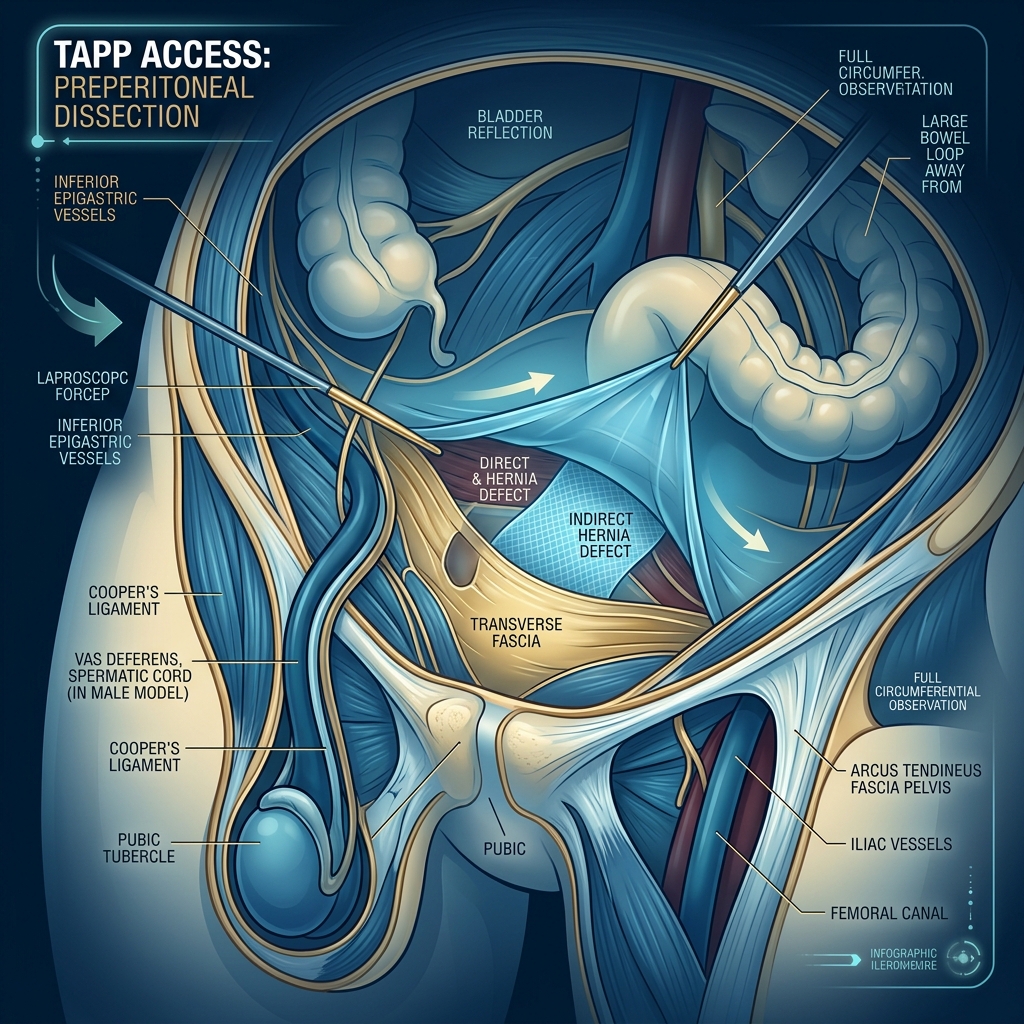
TAPP stands for Transabdominal Preperitoneal hernia repair. It is a highly reliable laparoscopic technique where the surgeon accesses the preperitoneal plane (behind the abdominal lining) through the abdominal cavity.

Entering the abdominal cavity allows the surgeon to visualize the entire pelvis area. This is highly useful for inspecting both groin channels, repairing bilateral (double-sided) hernias efficiently, and detecting other underlying wall weaknesses that might not be visible from the outside.

TAPP vs TEP: Key Comparison

Aspect TAPP Repair TEP Repair
Peritoneal Entry Yes - briefly No (stays outside)
Pelvic Visibility Full 360 view Localized preperitoneal
Complexity fit Excellent for large hernias Best for primary/simpler
TAPP Hernia Repair - Advanced Abdominal View

Complete Visibility

Allows 360-degree inspection of groin defects
The Procedure

TAPP Procedure Step-by-Step

An overview of the clinical workflow can help demystify the TAPP surgery.

1

Anesthesia & Entry

General anesthesia is administered. The surgeon enters the abdominal cavity through a 1 cm incision at the belly button, inflating it with carbon dioxide for safe visualization.

2

Peritoneal Incision

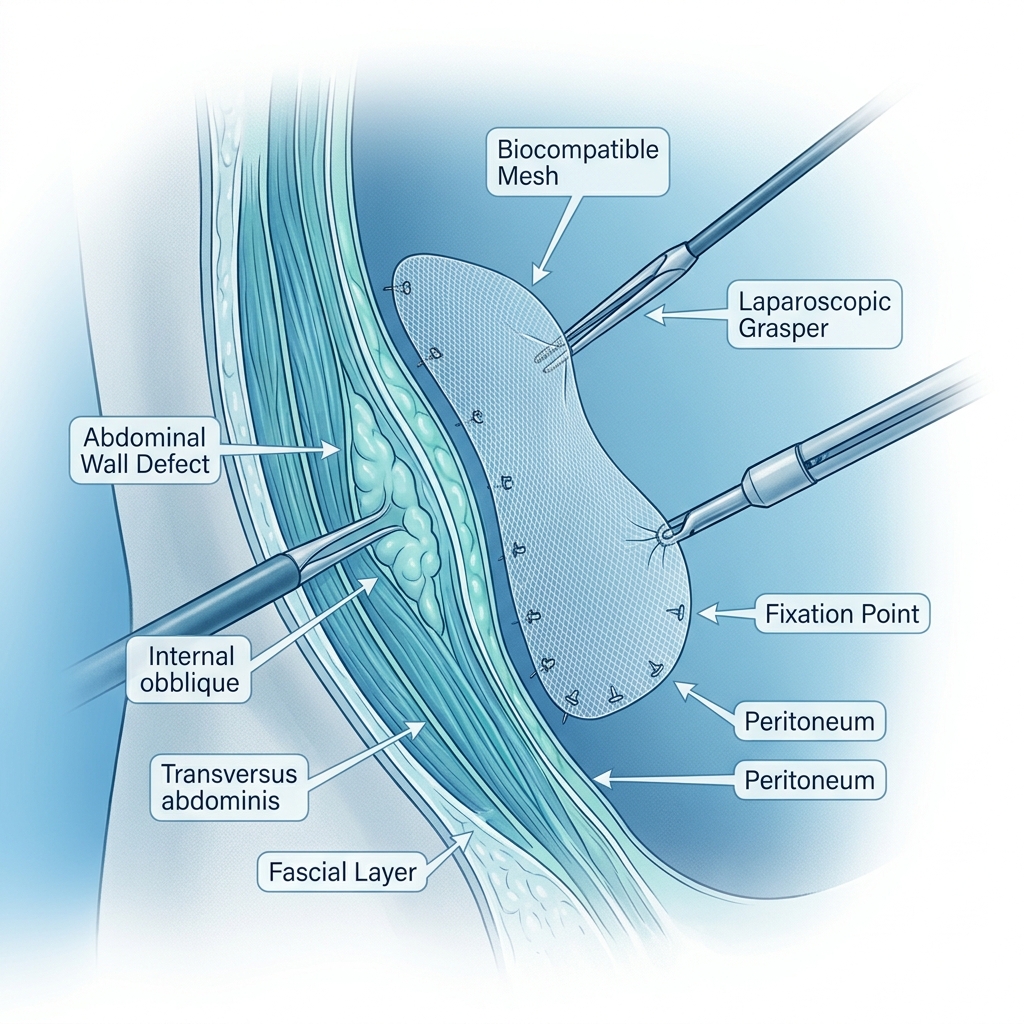
Under micro-camera guidance, the surgeon makes a precise flap cut in the peritoneum above the hernia bulge, opening access directly to the preperitoneal repair space.

3

Hernia Reduction & Mesh Deployment

The protruding hernia contents are gently retracted back into the abdominal cavity. A synthetic anatomical mesh is laid flat, covering the defect and its surrounding weak areas.

4

Peritoneal Closure

The peritoneal flap is carefully sutured back shut over the mesh. This isolates the mesh completely from internal organs, eliminating bowel friction or stickiness.

Advantages

Benefits of
TAPP Repair

TAPP repair provides outstanding surgical reliability and diagnostic leverage. Here is why it remains a premium standard for groin and bilateral hernias.

TAPP Hernia Surgery Precision

Gold Standard Care

Top Choice for Groin & Bilateral Hernias

Complete Pelvis View

Provides direct visual inspection of all abdominal wall structures, allowing the surgeon to find and secure concurrent groin wall weaknesses on both sides.

High Recurrence Control

Suturing the mesh securely inside the preperitoneal pocket guarantees it remains stabilized, reducing long-term recurrence rates to below 1.5%.

Standardized and Safe

TAPP's clear anatomical landmarks make it highly reliable, ensuring extremely high procedural safety and safety margins.

Simultaneous Bilateral Repair

Both groin channels can be addressed using the same laparoscopy incisions, avoiding separate open groin incisions.

Quick Daycare Return

Many patients undergo TAPP as outpatient day surgery, returning home with minimal down-time and starting desk duties in 5-7 days.

Micro Incisions

Small, minimally invasive ports reduce surgical skin cuts, delivering superior post-op cosmetic healing and zero large scars.

Healing Journey

TAPP Recovery Timeline

TAPP recovery is structured and highly reliable. Here is what you should expect during your healing journey.

Days 1-2

Hospital Stay

Most patients leave within a few hours or the next morning. Gentle walking is highly encouraged.

Days 3-7

Initial Healing

Rest comfortably at home. Avoid lifting items above 5 kg. Mild soreness at port sites disappears.

Weeks 2-3

Activity Increase

Desk-based work can be safely resumed. Return to driving and start active, brisk walks.

Weeks 4-6

Full Recovery

Mesh integrates with abdominal muscles. Resume heavy lifting, gym workouts, and sports.

When to Contact Dr. Kumar

Fever higher than 101°F
Increasing redness, swelling, or fluid at incisions
Severe pain not controlled by prescription medications
Difficulty urinating or passing bowel movements
Contact Specialist
🤷‍♂️ FAQ

Frequently Asked Questions

TAPP stands for Transabdominal Preperitoneal repair. Under general anesthesia, the surgeon accesses the hernia defect through small ports in the abdominal cavity, makes a precise cut in the peritoneum, places a synthetic mesh over the defect, and then tightly closes the peritoneum flap over the mesh to isolate it from internal organs.

Ready to Discuss TAPP Repair?

Dr. Kumar will evaluate your condition and recommend the most appropriate surgical technique for your specific needs.